A Broader Perspective on Change, Uncertainty, and Human Behaviour
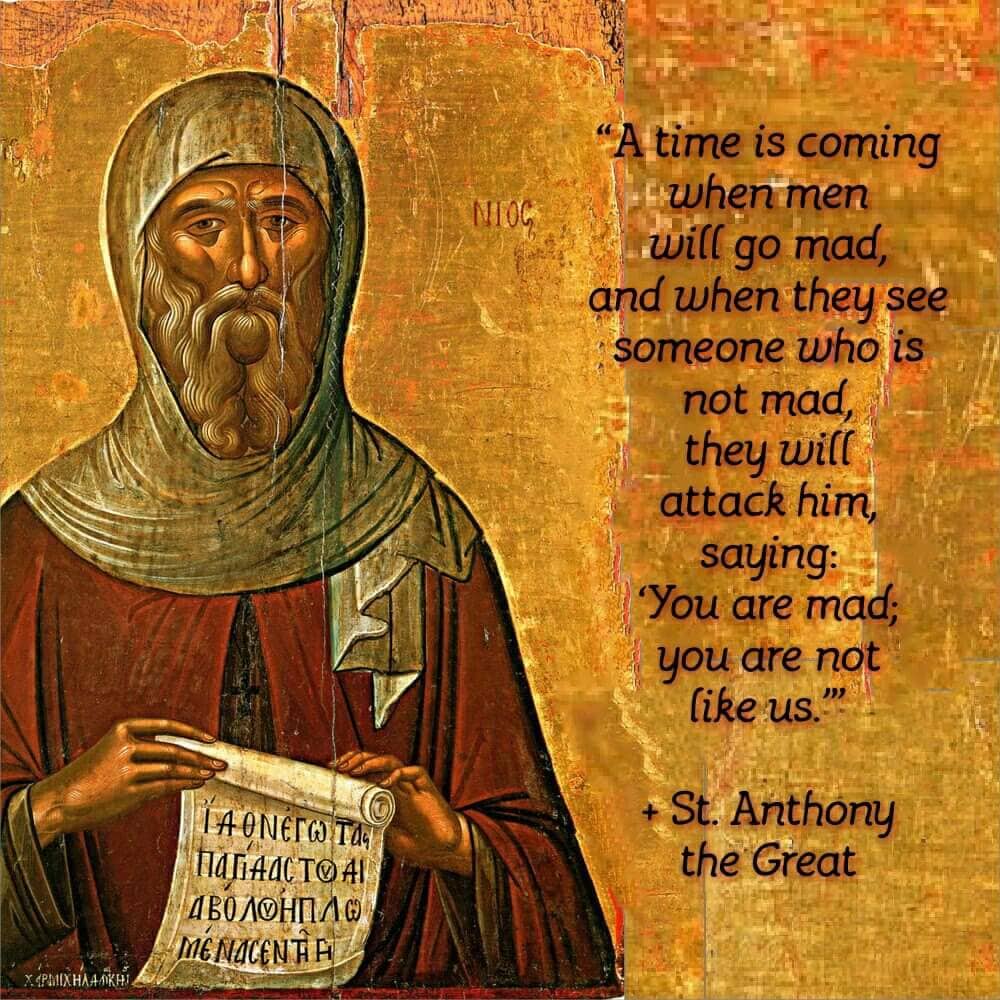
“A time is coming when men will go mad, and when they see someone who is not mad, they will attack him, saying, ‘You are mad; you are not like us.’” — Anthony the Great
Periods of uncertainty, upheaval, and rapid change are not new. Across history, people have repeatedly faced moments where social norms shift, institutions are questioned, and individuals feel disoriented, anxious, or disconnected from meaning.
What is new is the speed, volume, and emotional intensity with which information, opinion, and fear now circulate.
This page is offered as historical and psychological context — not prediction, instruction, or belief — for those who sense that something is changing and want to remain grounded, thoughtful, and psychologically steady while it does.
Historical Cycles and the Nature of Change
Many historians and sociologists have explored the idea that societies move through recurring phases of stability, disruption, rebuilding, and renewal.
Rather than viewing periods of upheaval as unique or unprecedented, these perspectives suggest that change follows patterns, even if the details differ each time.
The Fourth Turning
According to a sociological theory often referred to as the Fourth Turning, historical change is sometimes understood through recurring generational patterns, occasionally described as archetypes.
In broad terms, the framework suggests:
- Societies tend to move through distinct phases of social, political, and economic mood, known as “turnings”
- Each turning typically lasts around 20–25 years
- Generational cohorts are thought to shape and respond to the dominant mood of each phase
- Four such turnings are said to form a longer historical cycle, or saeculum
- A saeculum is roughly equivalent to a long human lifespan, usually spanning 80–100 years, though some cycles are thought to last longer
This framework, associated with historians William Strauss and Neil Howe, is presented here as one interpretive lens rather than as prediction or certainty. Many people find that viewing events through a longer historical arc can reduce fear and restore perspective — particularly during times of rapid change.
The Rise and Fall of Civilisations
A complementary historical reflection comes from British soldier and historian John Bagot Glubb, whose essay The Fate of Empires and Search for Survival examines patterns across civilisations over a period of more than 4,000 years.
Drawing on this long historical view, Glubb observed that many empires appear to follow a broader arc lasting roughly ten generations, or around 250 years. Rather than focusing on specific events, his work highlights recurring shifts in values, behaviour, and social cohesion over time.
He identified a series of commonly recurring stages in the life of empires, including:
- Growth and expansion
- Prosperity and confidence
- Cultural and moral shifts
- Gradual decline
These observations are not presented as prediction or inevitability, but as historical pattern recognition. Glubb’s work emphasises that outcomes are shaped by adaptability, values, and collective behaviour, rather than by fixed timelines. Many readers find this perspective reassuring rather than alarming — a reminder that periods of instability are not failure, but a recurring phase within longer cycles of human development.
Observations similar to these long-term historical patterns have also been noted in contemporary cultural commentary, including by Ann Vandersteel, who has drawn attention to recurring generational and civilisational cycles when discussing modern social change.
Historians have pointed to examples ranging from the Roman and Han civilisations to the Ottoman, Spanish, and British empires as illustrations of how societies often move through comparable phases of expansion, consolidation, and transformation over extended periods of time.
.
Psychological Awareness and Personal Resilience
Alongside historical change, there is a personal and psychological dimension.
Periods of social uncertainty often coincide with:
- Increased anxiety and mental overload
- Confusion caused by conflicting narratives
- Breakdown of trust (in institutions, media, or relationships)
- Heightened emotional reactivity
Modern psychology recognises the importance of understanding manipulative dynamics and unhealthy personality traits — particularly at an individual and relational level.
Clinical researchers such as Robert Hare and Martha Stout have explored how psychopathy, sociopathy, and emotional manipulation can operate subtly within everyday relationships and systems.
In parallel, writers and commentators including Michael Tsarion and Thomas Sheridan have examined similar themes through broader cultural, mythological, and societal lenses, focusing on how power, deception, and psychological distortion can shape collective experience as well as individual perception.
Concepts such as gaslighting describe how confusion and self-doubt can be reinforced over time, leaving individuals disconnected from their own judgement. Awareness of these dynamics is not about fear or suspicion — it is about clarity, boundaries, and psychological self-trust.
Experiential and Inner Perspectives
Not all responses to change are analytical or clinical. Some people explore periods of transition through direct inner experience, symbolism, and altered states of awareness.
One such voice is Neil Kramer, whose work draws on shamanic traditions and experiential inquiry. His focus is less on external systems and more on how individuals experience meaning, identity, and perception from the inside out.
While this approach does not function as psychology or therapy, some people find it a useful reflective complement to historical and psychological frameworks — particularly when navigating questions of meaning rather than diagnosis.
Public Intellectual Perspectives and Preparedness
Periods of uncertainty also give rise to public intellectuals who speak about meaning, responsibility, and preparedness in complex times.
One such figure is Jordan Peterson, a Canadian clinical psychologist, author, and Professor Emeritus at the University of Toronto. He is known for emphasising personal responsibility, psychological structure, and preparedness in the face of chaos.
Some people resonate with this focus on individual agency and discipline; others question aspects of his cultural and political commentary. His work is included here as one contemporary perspective, not as guidance or authority.
Importantly, no single thinker provides a complete map of human experience — particularly during periods of widespread uncertainty.
Alternative and Complementary Perspectives
Other psychologists and thinkers have approached questions of meaning, responsibility, and resilience from different angles.
These include Viktor Frankl, who emphasised meaning even in extreme suffering; Brené Brown, whose work highlights vulnerability, compassion, and connection; Jonathan Haidt, who examines moral psychology and polarisation; and Carl Jung, whose exploration of archetypes and individuation addresses the symbolic and unconscious dimensions of human life.
Together, these perspectives suggest that psychological wellbeing emerges not from rigid certainty, but from a balance of responsibility, connection, meaning, and self-awareness.
Why Perspective Matters
History suggests that uncertainty is a recurring feature of the human story.
Psychology suggests that how we respond internally matters more than external noise.
From my perspective, resilience is not built through denial or alarmism, but through:
- Grounded awareness
- Emotional regulation
- Discernment rather than reactivity
- The ability to hold complexity without losing stability
These are learnable skills — and they matter most when certainty is in short supply.
Support During Times of Uncertainty
If you are feeling overwhelmed, anxious, overthink everything or become unsettled — whether by personal circumstances or wider events — support can help you regain clarity and emotional steadiness.
At The Excel Practice, I work with individuals to:
- Calm mental overload
- Strengthen emotional resilience
- Improve clarity and self-trust
- Stay grounded during periods of change
This work is practical, calm, and psychologically grounded — focused on helping you navigate your inner experience, regardless of what is happening externally.
Call 07807 540142 or email here to ask a question or arrange a confidential consultation.
Book Your Session
Ask a Question
Context Note
This page is provided for historical and psychological reflection only. It does not promote ideology, prediction, or belief systems.
Examples Often Cited in Discussions of ~250-Year Civilisation Cycles
Historians who study long-term patterns have noted that several major civilisations appear to follow a broadly similar arc lasting around 8–12 generations (roughly 200–300 years), though timelines vary and are never exact.
Roman Republic → Roman Empire
- Early expansion and civic virtue
- Military consolidation and prosperity
- Cultural sophistication and bureaucracy
- Internal fragmentation and decline
Approximate arc: c. 500 BCE – 300 CE - Often referenced by Edward Gibbon and later historians as an example of long-term civilisational drift.
Han Dynasty (China)
- Unification and institutional strength
- Economic and cultural flourishing
- Intellectual refinement and centralisation
- Court corruption and fragmentation
Approximate arc: 206 BCE – 220 CE - A classic example in Chinese historiography of dynastic rise and fall.
Islamic Caliphates (Umayyad → Abbasid)
- Rapid expansion and cohesion
- Scientific, cultural, and intellectual golden age
- Increasing complexity and internal division
- Gradual political fragmentation
Approximate arc: 7th–13th centuries - Often cited in long-cycle civilisational studies.
Ottoman Empire
- Frontier expansion and military innovation
- Administrative sophistication and stability
- Cultural and bureaucratic complexity
- Gradual stagnation and decentralisation
Approximate arc: 1300–1600s (with extended decline afterward)
Spanish Empire
- Exploration and conquest
- Massive wealth influx and dominance
- Institutional rigidity and overextension
- Economic strain and loss of influence
Approximate arc: late 1400s – mid-1700s
British Empire
- Maritime expansion and trade
- Industrial and financial dominance
- Intellectual, legal, and institutional maturity
- Gradual contraction and transformation
Approximate arc: late 1600s – mid-1900s
Often referenced cautiously because transformation, not collapse, followed.